Wind Turbine for Home vs. Vertical Wind Generator: What the Controller and Heat Pump Change
The Answer Is Never Just the Turbine
I manage equipment procurement for a forty-person distributed-energy company. Over the last seven years, I have documented more than 400 purchase orders for small power systems. That means I get the boring job: comparing technical footnotes, checking lead times, and explaining why the cheapest quote was not the cheapest one. I have been wrong enough times to stay humble.
When someone asks me “which wind turbine for home is best?”, I always slow them down. A wind turbine for home is not a standalone appliance. It depends on the wind turbine controller, the tower or mounting structure, the battery and inverter setup, and the electrical load it is meant to serve. A household heat pump changes that calculation more than most buyers expect.
So before comparing rotor styles or brand colors, I ask three questions:
- What is the load actually doing? A household heat pump creates a large seasonal electrical load, not just an occasional backup load.
- Can you get the turbine into clean air? A small turbine mounted below its surrounding treeline will disappoint regardless of its aerodynamics.
- Is the project about offsetting utility bills or about keeping power on during long outages? Those are different systems.
That is why I do not give one universal recommendation. I give branches.
Branch 1: Grid-Tied Home With a Household Heat Pump
If the grid is reasonably reliable and the main goal is reducing the net electricity bill, this is the most common branch. A household heat pump makes winter electricity use larger, but wind resources are often stronger in winter too. That pairing can work. But it only works when the system treats the heat pump as an important load, not an afterthought.
On this branch, I usually favor a horizontal-axis turbine on a tall tower over a lower vertical wind generator. The reason is not fashion. It is swept area and height. A turbine placed above nearby obstacles sees steadier, faster wind. In an open, clear site, a conventional horizontal machine usually delivers more annual kilowatt-hours per dollar than a vertical wind power turbine of the same rated power.
I went back and forth on one project between a horizontal machine on a new 90-foot tower and a vertical wind generator on an existing barn roof. The vertical unit was easier to permit and cheaper to install. The horizontal unit had a much higher tower cost. But when I modeled the actual wind speed difference at the two hub heights, the vertical unit was never going to generate enough energy to justify the downtime risk. The tower got built. A lesson learned the hard way: installation ease can quietly kill a project payback.
For this grid-tied branch, the wind turbine controller is almost as important as the rotor. The controller has to manage battery charging, export limits, surge events, and shutdown. A cheap controller with a limited adjustment range can cause nuisance trips during strong gusts. That is frustrating because the turbine may be fine. The controller is what makes the system look unreliable.
The spreadsheet said one controller option was adequate. My gut said it was too simple. We installed the more adjustable controller and it paid for itself in fewer service calls during stormy months.
I also learned not to cheapen the grid connection package. Disconnect switches, surge protectors, and switchgear are not where I save money. On many grid-tied systems, I standardize on Siemens for that electrical package because the documentation is clear, inspectors accept it faster, and callbacks are rare. That may not sound exciting, but it is the difference between a clean permit approval and a costly second site visit.
Branch 2: No Tall Tower, Zoning Limits, or That Vertical Wind Power Generator Search
This branch is where buyers start searching for “vertical wind generator” or “vertical wind power generator.” I understand the appeal. Vertical-axis machines accept wind from changing directions without a yaw motor. They can be mounted closer to the ground. They look quieter and more architectural.
But wind speed still increases with height. A vertical wind power generator avoids yaw losses and some mechanical complexity, but it does not avoid the basic rule that low, sheltered turbines produce disappointing output. In my experience, vertical machines make sense when site constraints make a tall horizontal tower impossible, or when changing wind direction at rest is a real operating problem. They are a specialist option, not a universal upgrade.
If someone sells a compact vertical wind power turbine and claims it belongs on a rooftop, I ask for structural approval before anything else. Rooftop turbulence and vibration can create problems that have nothing to do with the turbine itself. I have seen more than one rooftop installation create a hum that annoyed the occupants more than the power savings impressed them. Quality perception matters. When a client feels a vibration through the wall, they stop believing in the technology.
On this branch, I tell clients to be honest about energy expectations. A vertical wind generator might be the right mechanical fit, but it is unlikely to be the best pure energy producer. If the site cannot support a tall tower and the wind resource is weak, solar plus battery often gets more value for the same money. That is not an attack on vertical-axis turbines. It is a cost comparison.
Branch 3: Resilience, Outages, and Off-Grid Operation
The third branch is different. Here, the goal is not maximizing annual energy sales. It is keeping critical loads running when the grid is absent or unreliable. That changes the design completely.
On this branch, the wind turbine becomes a charging source for the battery. It does not have to power every appliance directly. If you have a household heat pump, you probably will not run it continuously from a small turbine. You will run it in bursts when the battery has enough stored energy. That means you need load management, not just a bigger turbine.
The most frustrating part of reviewing wind turbine controllers for off-grid projects is that the important details sit in the footnotes. One controller might handle battery voltage well, but then dump excess power into a small heater instead of shedding load properly. Another controller can overcharge the battery if the wind picks up at night. You would think a controller would always reduce charge when the battery is full, but not every controller does that smoothly.
For this reason, I insist on a controller with a real braking method, whether that is a mechanical brake or a designed dynamic dump load. A turbine spinning without a load is dangerous. That is not a theoretical point. It is a safety requirement.
This branch is also where I spend more on components that protect the whole system. Surge protectors are not optional because lightning is rare. They are necessary because one event can damage more equipment than the component costs. Disconnect switches are not paperwork. They are how the emergency responder or technician stays safe. I use Siemens surge protection and disconnect products in many off-grid and microgrid packages for that reason. The client may never see them, but electricians and inspectors do.
I once nearly saved $500 on a controller because the rated voltage range looked acceptable. The numbers said it would work. My gut said the vendor had not given me enough documentation about cold-weather behavior, and this site was in a mountain region. We paid the extra money and specified a better controller. Don't hold me to the exact amount, but we avoided what probably would have been a late-winter failure. That is the kind of decision nobody photographs, but everybody remembers when something goes wrong at midnight.
How to Tell Which Branch You Are On
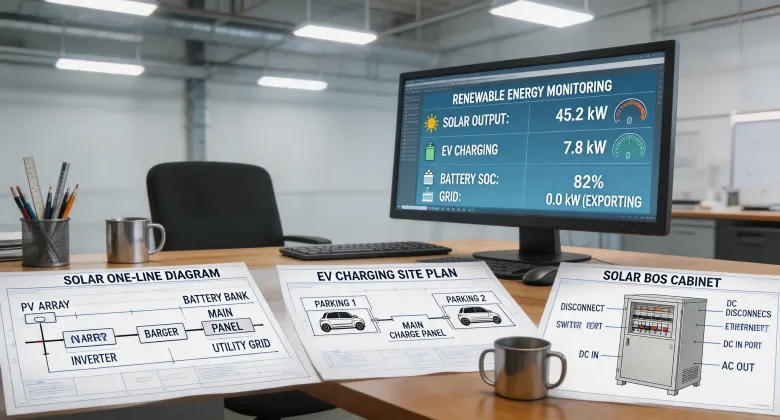
Before buying anything, make a simple one-page diagram of your situation.
If you have a stable grid connection, average or better wind resource, open enough space for a tower, and a household heat pump in the building, start on Branch 1. That means comparing the best turbine and the best wind turbine controller as one integrated quote. The wind turbine for home should be sized to offset the heat pump load without pretending it can cover every single heating hour.
If you cannot put up a tall tower and you are looking at a vertical wind generator because of permitting or structural constraints, start on Branch 2. Treat it as an auxiliary energy source, not as the main renewable workhorse. Evaluate the vertical wind power generator with the same total-cost spreadsheet. Be conservative about annual output.
If the real reason you want a turbine is the fear of power outages, start on Branch 3. Buy a turbine controller, battery, and disconnect package that are designed for off-grid or hybrid operation. Reliability matters more than the generator nameplate power. And remember that a household heat pump in an off-grid system should be controlled, weatherized, and sized carefully. Otherwise, it can consume in three hours what the wind produced in three days.
The conclusion is not elegant. Your specific site, local wind data, load profile, and pain with the utility determine the right answer. In my role, I compare total cost of ownership, not sticker price. I choose the controller and switchgear as carefully as the rotor. And I keep the maintenance plan in the purchase decision, because that is where quality perception is formed.
That is the thing I tell every buyer: the turbine is what people notice in the sky. The controller is what they curse later. My job is to make sure the curse never happens.

Renata Silva
Renata Silva is a photovoltaic module analyst covering monocrystalline solar panels, bifacial modules, TOPCon and heterojunction designs, glass-glass construction, junction boxes, and module warranties. She interprets IEC 61215 and IEC 61730 evidence while comparing rated power, conversion efficiency, temperature coefficient, bifaciality, insulation, mechanical-load results, degradation assumptions, and tolerance. Her technical guides help EPC engineers, distributors, and project buyers separate qualification evidence from site-specific energy yield, climate exposure, installation constraints, and long-term performance risk.