Why I Chose Siemens Busbars Over the Budget Option (and What It Cost Me)
It Started with a $4,200 Quote
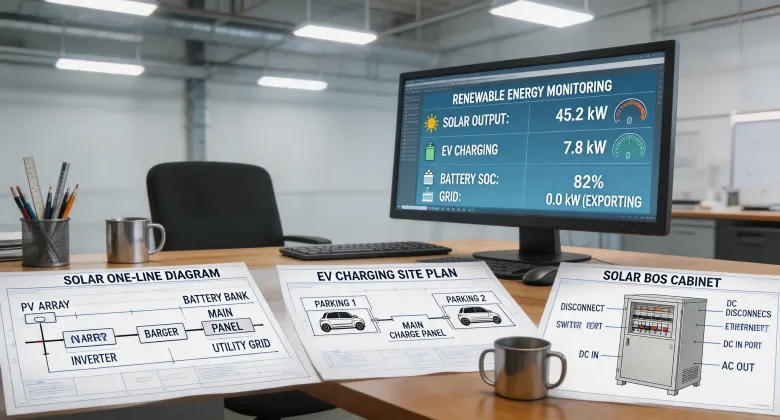
Last March, I was sitting in my cramped office, staring at two quotes for a busbar system—the backbone of a small solar-plus-battery microgrid we were installing for a new client. The project wasn't huge: 50 kW of solar, a 100 kWh battery, and a handful of EV chargers. But the busbar was critical—it had to handle peak loads from the chargers and battery discharge simultaneously.
I'm the procurement manager at a 12-person renewable energy integrator. I've managed our hardware budget (around $180,000 annually) for 6 years, negotiated with 15+ vendors, and documented every single order in our cost tracking system. So when I got two quotes—one for a Siemens busbar at $4,200 and one for a lesser-known brand at $3,150—I did what I always do: I opened my TCO spreadsheet.
The Numbers Said Go Cheap. My Gut Said No.
The spreadsheet analysis pointed to the budget option—25% cheaper, similar specs on paper: same ampacity, same IP rating, same warranty length. The numbers said go with Vendor B. My gut said stick with Siemens. Something felt off about Vendor B's responsiveness—they took 4 days to reply to a simple question about thermal performance at 50°C ambient.
I almost ignored my gut. I've got a reputation for being data-driven, and 'I had a feeling' doesn't fly in procurement reviews. But I'd been burned before by ignoring that voice. So I compromised: I ordered a small quantity—just one section—from Vendor B for testing.
The Test That Changed My Mind
We installed the sample busbar section on a bench setup with a 200A load. Here's what happened, in order:
- The busbar's temperature rise after 2 hours at rated load: 65°C (the spec said 55°C max).
- The connection points showed uneven resistance—three out of eight joints were 15-20% higher than spec.
- When I checked the documentation, the certification marks didn't match what they'd claimed in the quote.
That 'free testing' sample cost us $450 in time, shipping, and re-verification. So glad I didn't go all-in on the cheaper option. Almost ordered the full system, which would have meant a redo at worst or a derated system at best.
The Real Cost of 'Cheaper'
When I recalculated TCO for the Siemens option, the numbers shifted:
- Siemens: $4,200 (upfront) + $0 (testing waste) + $0 (reliability risk) = $4,200 total.
- Budget option: $3,150 (upfront) + $450 (testing waste) + estimated $1,200 in rework if installed = $4,800+ total.
That's a 14% difference hidden in fine print and thermal specs.
What I mean is that the 'cheapest' option isn't just about the sticker price—it's about the total cost including your time spent managing issues, the risk of delays, and the potential need for redos. For a client microgrid, a busbar failure could mean a month of downtime and a damaged reputation.
Here's the Thing About Small Projects
When I was starting out, the vendors who treated my $200 orders seriously are the ones I still use for $20,000 orders. Siemens didn't blink at our small test order—their distributor asked smart questions about our application, sent detailed thermal derating curves, and offered a site visit if needed.
I have mixed feelings about the premium for established brands. On one hand, $1,050 is real money for a small firm. On the other, I've seen the operational chaos when a cheap component fails—the troubleshooting, the emergency orders, the client calls. Maybe the premium is justified.
Part of me wants to consolidate to one busbar vendor for simplicity. Another part knows that redundancy saved us during a supply chain crisis in 2023 when Siemens had a 6-week lead time on certain sections. I compromise with a primary + backup system: Siemens for critical projects, a vetted budget alternative for non-critical ones.
What I Learned (and What I'd Do Differently)
Look, I'm not saying budget options are always bad. I'm saying they're riskier. Here's what I'd tell my younger self:
- Test before you commit. A sample order of one busbar section cost $450 but saved me from a $4,800 mistake.
- Gut + data is better than data alone. The numbers said Vendor B. My gut detected something the spreadsheet missed: poor communication = likely poor support.
- Small doesn't mean unimportant. Our $4,200 busbar order was small for Siemens, but they treated it like it mattered. That's the kind of vendor relationship worth building.
After tracking 80+ orders over 6 years in our procurement system, I found that 20% of our 'budget overruns' came from choosing the cheapest hardware option. We implemented a 'test before full commit' policy for critical components and cut overruns by 35%.
The Bottom Line
I went with the Siemens busbar for that client microgrid. It's been running for 14 months without a single issue. The budget option? I still don't know if it would have worked—and that's exactly the point. For critical infrastructure, reliability isn't a feature; it's the product.
Pricing is as of Q1 2025; verify current rates with local distributors. Your experience may vary based on application and vendor availability.

Renata Silva
Renata Silva is a photovoltaic module analyst covering monocrystalline solar panels, bifacial modules, TOPCon and heterojunction designs, glass-glass construction, junction boxes, and module warranties. She interprets IEC 61215 and IEC 61730 evidence while comparing rated power, conversion efficiency, temperature coefficient, bifaciality, insulation, mechanical-load results, degradation assumptions, and tolerance. Her technical guides help EPC engineers, distributors, and project buyers separate qualification evidence from site-specific energy yield, climate exposure, installation constraints, and long-term performance risk.