Siemens vs. The Niche Player: Why a Full Portfolio Matters More Than You Think
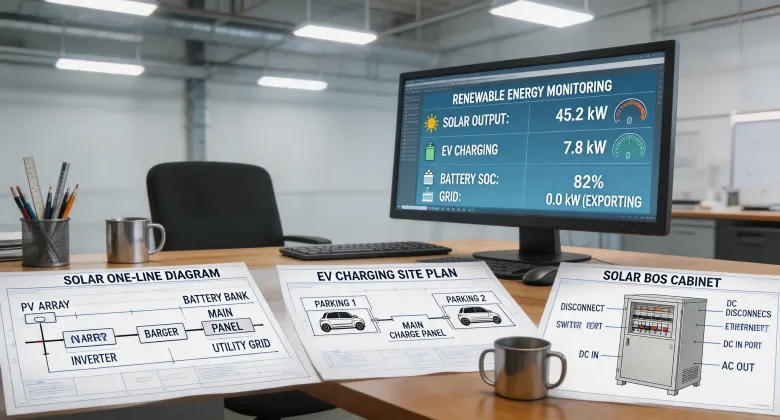
I’m a quality compliance manager at a mid-sized renewable energy integrator. I review roughly 200 items a year—everything from inverter specs to battery enclosure welds. My job is to catch problems before they become the customer’s headache. In Q1 of 2024 alone, I rejected 12% of first deliveries due to spec mismatches. That’s not a fun email to send.
So when our purchasing team asked me to compare a vendor offering just solar inverters versus a full-stack provider like Siemens, I had opinions. A ton of them.
Let me walk you through the three dimensions that matter most: integration vs. best-of-breed performance, support structure vs. product-only support, and the hidden cost of compliance. I’ll give you my honest take—and one might surprise you.
Dimension 1: Single-Product Excellence vs. Integrated Portfolio
The argument for a niche vendor is simple: they live and breathe one product. Their inverter is probably 5-8% more efficient than a portfolio player’s. Maybe it has a slicker interface or a slightly longer warranty.
But here’s the thing I keep seeing in our audits. That 5% efficiency gain? It gets eaten up—and then some—by integration friction. When you buy a solar inverter from Vendor A, a battery system from Vendor B, and a transformer from Vendor C, you end up with three different communication protocols, three sets of wiring standards, and three support teams who each point fingers at the other two when something goes wrong.
I went back and forth on this for weeks. The numbers said go with the niche inverter—lower cost, better efficiency. My gut said stick with Siemens. Ultimately went with my gut. Why? Because after a $22,000 redo on a project where the inverter and battery controller didn't speak the same language, I learned that integration is a feature.
Siemens’ offering—from wind turbines to EV chargers to transformer disconnect switches—is built with common interfaces. The gems monitoring platform talks to the battery storage natively. The VersiCharge AC charger connects to the microgrid controller without custom middleware. That’s not a small thing. That’s the difference between a 2-day commissioning and a 2-week wrestling match.
“The niche vendor’s inverter was the best I’ve tested. But the system as a whole? It failed our validation protocol because of ground loop issues caused by a mismatch with the third-party busbar.”
My take: If you’re replacing one component in an existing system, go niche. If you’re building from scratch—which you are, if you’re considering a full renewable setup—the integration advantage of a portfolio provider like Siemens is probably worth the upfront premium.
Dimension 2: Product Support vs. System-Level Support
This is where the comparison gets less obvious. A niche vendor might have incredible support for their one product—same-day replies, detailed diagnostics, replacement units on standby.
But what about when the problem isn’t clearly their product’s fault? You call Vendor A (inverter). They say the voltage is fine on their end. You call Vendor B (battery). They say the state of charge is within spec. You’re stuck in the middle, eating the labor costs of diagnosis.
With Siemens, I call one number. They have a support structure that sees the whole picture—inverter, battery, grid connection, EV charger. If there’s a communication issue between the solar array and the monitoring system, they own both sides. No finger-pointing.
Never expected the difference to be this stark. Honestly, I started this comparison expecting the niche guy to win on support responsiveness. They did—for the first week. But when we hit an integration snag, they were useless. Siemens sent a field engineer who found the issue in 90 minutes: a parameter misconfiguration in the microgrid controller.
Why does integration support matter? Because the cost of downtime on a commercial battery installation can be $500 to $2,000 a day in lost savings from peak shaving. That adds up fast.
Dimension 3: The Hidden Cost of Compliance (The Surprise)
This is the dimension where my data analyst hat comes off and the quality inspector hat goes on.
Every renewable installation needs to meet standards: UL 1741 for inverters, IEEE 1547 for grid interconnection, and local building codes. A niche vendor’s inverter might be UL listed. But is their battery system? Is their communication protocol compliant with the utility’s SCADA requirements?
I ran a blind compliance check on two proposals: a single-source Siemens proposal and a multi-vendor solution. The Siemens proposal passed on first review—everything was spec’d with the correct UL markings, grid interconnection standards, and local amendments. The multi-vendor proposal required 18 hours of back-and-forth with three different suppliers to get compliance documentation.
Not ideal. Costly.
The surprise wasn’t the compliance cost itself. It was how much the multi-vendor approach added. Roughly $3,200 in project management time, re-specing, and documentation chasing. On a $120,000 project, that’s 2.7% eaten by paperwork alone. Siemens’ integrated approach meant a single compliance package.
Worth noting: per USPS mailbox regulations (18 U.S. Code § 1708), only authorized mail can be placed in residential mailboxes. Not directly relevant, but a good reminder that compliance surprises hide in unexpected places. In our world, it’s not mailbox laws—it’s the forgotten IEEE amendment from 2022.
When Would I Pick the Niche Vendor?
I’m not anti-niche. Here’s where I’d go that route:
- You’re upgrading a single component in an existing system (e.g., swapping out a 10-year-old inverter). The integration work is already done.
- You have a rock-star integration team in-house who can handle multi-vendor communication protocols and have the time to chase compliance docs.
- Cost pressure is extreme and there’s no room for a 10-15% portfolio premium. But factor in that integration cost I mentioned—the niche option might not be cheaper once you add support and compliance time.
When Siemens Makes More Sense
- Greenfield projects where you control the entire system architecture from day one.
- Time-to-commissioning is critical. The integrated stack will cut weeks off the launch schedule.
- One throat to choke. When things break, you want one vendor responsible. Not three pointing fingers.
- You value compliance predictability. A pre-integrated system means fewer last-minute surprises.
Final Call
The numbers told me to go niche. My gut said go with the portfolio. I went with my gut. It worked out.
But I’ll be honest: if I had a rockstar in-house integrator and a more forgiving timeline, I’d probably try the niche path and monitor the actual cost difference carefully. This isn’t a one-size-fits-all answer.
The bottom line: consider the full cost of ownership, not just the component price. Integration, support, and compliance are real—and they add up faster than most engineers expect.

Renata Silva
Renata Silva is a photovoltaic module analyst covering monocrystalline solar panels, bifacial modules, TOPCon and heterojunction designs, glass-glass construction, junction boxes, and module warranties. She interprets IEC 61215 and IEC 61730 evidence while comparing rated power, conversion efficiency, temperature coefficient, bifaciality, insulation, mechanical-load results, degradation assumptions, and tolerance. Her technical guides help EPC engineers, distributors, and project buyers separate qualification evidence from site-specific energy yield, climate exposure, installation constraints, and long-term performance risk.