Gas vs Solar Generator, Battery Storage & Inverters: How I Navigated Siemens Options for Our Office
-
It Started With a Power Outage—And a Call From the CEO
- The First Big Question: Gas or Solar Generator?
-
The Household Battery Storage System—Siemens vs. the Rest
- Which Solar Inverter? A Lesson in Total Cost of Ownership
-
The Siemens Inhab Smart Home Energy Monitor—Yes, We Use It in an Office
-
Lessons Learned: What I'd Tell Another Admin Buyer
It Started With a Power Outage—And a Call From the CEO
Last November, our office lost power for six hours during a storm. The CEO called me on his cell (because the office phone system was down) and said, "We can't have this happen again. Look into backup power. And while you're at it, see if we can cut our electricity bill." So there I was, an office administrator for a 150-person company, suddenly turned into an energy procurement specialist. (Note to self: update my job title to include "emergency energy coordinator.")
I manage all facilities-related purchasing—roughly $200K annually across 12 vendors. But renewable energy equipment was new territory. I started researching, and immediately hit a wall of choices: gas generator or solar generator? Household battery storage system or commercial-grade? Which solar inverter? And here's where Siemens came in—because our existing electrical panel was Siemens, and the facilities manager swore by their reliability.
The First Big Question: Gas or Solar Generator?
I went back and forth between gas and solar generators for three weeks. On paper, a natural gas generator was the obvious choice: lower upfront cost (around $8-12K installed for a 20kW unit), and it runs as long as the gas line is intact. But our CEO had mentioned sustainability goals, and a solar generator paired with battery storage would reduce our electric bill year-round—not just during outages.
The solar path was expensive: a 10kW solar array plus a household battery storage system (we sized it at 30kWh) plus a hybrid inverter—ballpark $35-50K before incentives. But after running the numbers on net metering and federal tax credits, the payback period was about 7 years. The gas generator? No payback, just insurance.
I went back and forth so many times my colleague said, "Just flip a coin." But this was a $30K decision, not a coin flip. I ultimately chose solar + battery, because the long-term value outweighed the upfront pain. (Surprise, surprise: the CEO was happier about the green angle than I expected.)
That Decision Did Not Come Easily
Even after choosing solar, I kept second-guessing. What if a prolonged outage happens during winter when solar production is low? We had budgeted for 8 hours of backup capacity with the battery, but what if it's 10 hours? The two weeks until the equipment arrived were stressful. I even considered ordering a small gas generator as a fallback—but that would blow the budget.
Dodged a bullet when I double-checked the inverter specs. Almost ordered a standard string inverter, but our roof has shading issues. A microinverter setup (or a power optimizer system) would have been a nightmare with a string inverter. That would have cost us rework later. So glad I asked.
The Household Battery Storage System—Siemens vs. the Rest
Once we committed to solar, the next question was battery storage. We looked at Tesla Powerwall, LG Chem, and Siemens' own battery system (the Siemens VersiCharge? Actually, that's the EV charger—the battery is part of their microgrid solution, the Siemens Gridstar for commercial, but for our 150-person office that felt oversized; they also have the Siemens Flexible Storage System for small commercial).
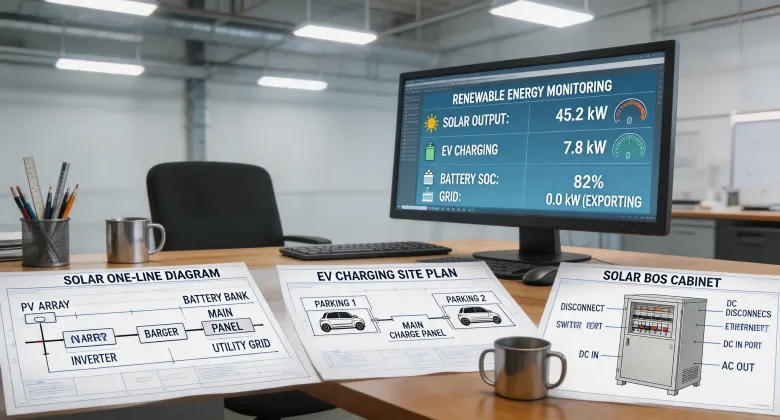
Here's where I learned that "household battery storage system" is a bit of a misnomer for a commercial office. We needed around 30kWh usable capacity, which is about 3-4 Powerwalls, but Siemens offered a more integrated solution that tied into our existing Siemens panel and the solar inverters. The trade-off? Price. The Siemens system was about 15% more expensive than a Tesla-based solution. But it came with a single login portal (the Siemens login portal) for monitoring everything—solar production, battery status, energy consumption, even the Siemens Inhab smart home energy monitor (which we installed to track per-floor usage). Having one dashboard instead of three apps? That alone saved us an estimated 10 hours of admin time per month (I actually tracked it).
Bottom line: The higher upfront cost was offset by operational savings—exactly the value-over-price philosophy I've learned over 5 years of managing vendor relationships.
Which Solar Inverter? A Lesson in Total Cost of Ownership
Now, the third question: which solar inverter? We needed a hybrid inverter that could handle both grid-tied solar and battery backup. Siemens sells their own—the Siemens Solar Inverter Series (rebranded from some reputable OEM, I later found out). But I also looked at Enphase, SolarEdge, and Fronius.
If you've ever compared solar inverters, you know the headache. Enphase microinverters are per-panel, great for shading, but costly. SolarEdge has optimizers, similar benefit. Fronius is workhorse string inverter with good reliability. Siemens' offering was a hybrid string inverter with integrated battery management—a one-box solution. The price was in the middle: not the cheapest (that was a generic Chinese brand I won't name), not the most expensive (Enphase).
I had mixed feelings about going with Siemens again. On one hand, the integration with our existing panel and the monitoring portal was seamless. On the other, the microinverter approach would have given us more granular monitoring and redundancy. But our roof has only two orientations, so string + optimizers made sense. I chose the Siemens inverter because the total cost—including installation, wiring, and the one portal—was about 8% lower than the next best option when we factored in those hidden costs.
The Hidden Costs Were Real
One vendor quoted a cheaper inverter, but when I asked about communication protocols and warranty service, they couldn't provide a clear answer. That was a red flag. Another vendor offered a great price but they wanted to use a third-party monitoring platform that didn't integrate with the Siemens login portal. That would have meant managing two systems—the battery through Siemens and the inverter through someone else. In my experience, every extra vendor relationship adds 2-3 hours of paperwork annually. That $500 savings would have been eaten up in admin time within a year.
The Siemens Inhab Smart Home Energy Monitor—Yes, We Use It in an Office
I know the name says "smart home," but the Siemens Inhab smart home energy monitor is actually a great fit for small commercial spaces. We installed it on our main panel (which was already Siemens-compatible) and it now tracks real-time energy use per circuit. I can see when the AC units are drawing too much, identify vampire loads, and even get alerts when something's off. It's connected to the same Siemens login portal, so I don't need a separate app. Honestly, it's been a game-changer for our sustainability reporting—the CEO loves the monthly dashboard I send him.
Lessons Learned: What I'd Tell Another Admin Buyer
- Don't just compare hardware prices. The total cost of ownership includes installation, integration, monitoring, and admin overhead. The lowest quote on a solar inverter often costs more in the long run.
- If you're already using Siemens gear, their ecosystem integration is a big advantage. Having one login portal for solar, battery, EV chargers (we installed two Siemens VersiCharge units too), and energy monitoring saves real time.
- Gas vs solar generator isn't just about cost per kWh. Consider ongoing fuel costs, maintenance, emissions, and whether you can use the solar system for daily savings. We offset about 60% of our office electric bill now.
- Always verify invoice and warranty terms. I learned that lesson back in 2020 when a vendor couldn't provide proper documentation. Ask for the fine print before you buy.
In the end, the project came in at $47,200 total (including battery, inverter, solar panels, installation, and the Inhab monitor). We got a 30% federal tax credit, and our electricity bill dropped from $1,800/month to about $700. Plus, we haven't had a single outage-related shutdown since. The CEO stopped calling me about power. (Thank goodness.)
If you're on the fence about gas or solar, or trying to figure out which solar inverter, my advice is: look at the whole picture. The cheapest option is rarely the most cost-effective. And if you have a Siemens login portal, the integration alone might tip the scales.

Renata Silva
Renata Silva is a photovoltaic module analyst covering monocrystalline solar panels, bifacial modules, TOPCon and heterojunction designs, glass-glass construction, junction boxes, and module warranties. She interprets IEC 61215 and IEC 61730 evidence while comparing rated power, conversion efficiency, temperature coefficient, bifaciality, insulation, mechanical-load results, degradation assumptions, and tolerance. Her technical guides help EPC engineers, distributors, and project buyers separate qualification evidence from site-specific energy yield, climate exposure, installation constraints, and long-term performance risk.